













Mobile Innovation Drives the Next Wave of Digital Entertainment
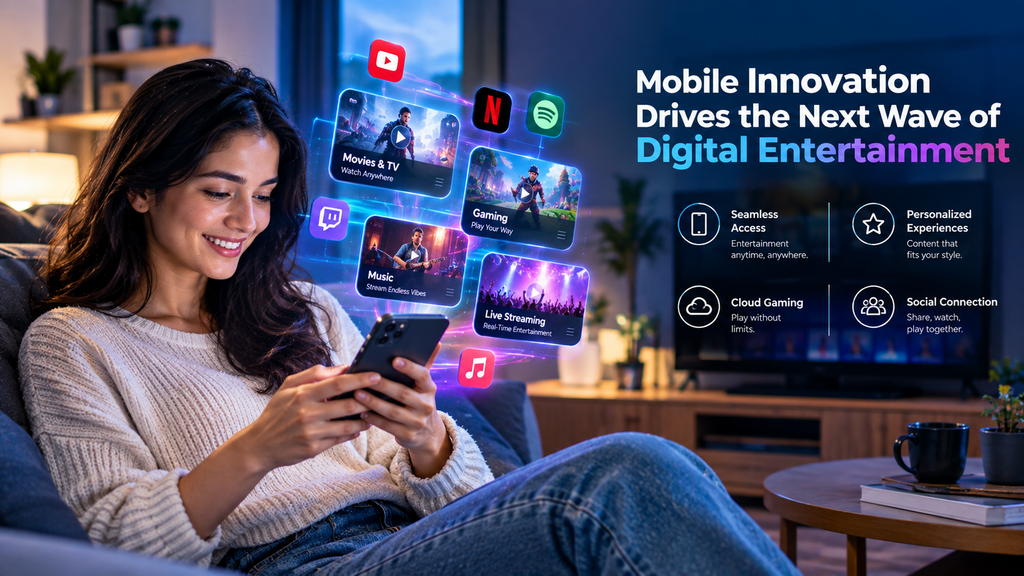
A commute that used to mean staring out a window now means finishing an episode, joining a live multiplayer match, or getting lost in an interactive story that adjusts based on choices made days earlier. Entertainment used to be something people sat down for. Now it fits into gaps a few minutes here, a longer stretch there because mobile technology has made it portable, responsive, and personal in ways television and desktop gaming never quite managed. This shift has pushed entertainment brands, studios, and startups to work closely with an experienced Mobile App Development company, since building for this new entertainment landscape requires a fundamentally different approach than porting old formats onto a smaller screen.
Digital entertainment isn’t just moving to mobile. It’s being reshaped by mobile, in ways that are changing what “entertainment” even means for a generation that’s grown up with a screen in their pocket rather than a television in the living room.
Why Mobile Has Become Entertainment’s Primary Battleground
A few forces have converged to make mobile the dominant entertainment platform rather than simply another distribution channel. Smartphones are with people constantly, removing the friction of needing to be in a specific place at a specific time to engage with content. Processing power and connectivity have advanced enough to support genuinely sophisticated experiences real-time multiplayer gaming, high-quality streaming, complex interactive narratives that would have required dedicated hardware just a decade ago. And attention spans and consumption habits have shifted toward shorter, more frequent engagement rather than long, scheduled sessions, which mobile formats naturally accommodate far better than traditional media ever could.
Together, these forces haven’t just moved entertainment onto phones. They’ve changed what entertainment actually looks like.
Where Mobile Innovation Is Reshaping Entertainment Right Now
1. Gaming Has Become Genuinely Sophisticated
Mobile gaming used to mean simple, throwaway titles designed to fill idle moments. That’s changed dramatically. Console-quality graphics, complex multiplayer systems, and deeply developed narrative games now run natively on phones, drawing serious competition away from traditional gaming platforms and creating an entirely new category of dedicated mobile gamers who never touch a console.
2. Streaming Has Adapted to Mobile-First Consumption
Video streaming platforms have restructured much of their content and interface design around mobile viewing habits vertical video formats, shorter episodic content, and offline downloading for commutes and travel. This isn’t simply television content squeezed onto a smaller screen; it’s content genuinely designed around how people actually consume media on their phones.
3. Interactive and Choice-Driven Storytelling Is Expanding
Interactive fiction and choice-driven narrative apps have found a natural home on mobile, where touch interfaces make decision-making within a story feel intuitive and immediate. This format has grown into a genuine entertainment category, blending traditional storytelling with the kind of agency gaming audiences have come to expect.
4. Social and Live Entertainment Have Merged With Mobile Apps
Live streaming, social gaming, and interactive audio experiences have blurred the line between entertainment and social connection. Apps increasingly combine watching, playing, and interacting with friends or strangers in real time, creating entertainment experiences that feel communal rather than solitary, even when consumed alone on a single device.
5. Augmented Reality Is Creating Entirely New Entertainment Formats
AR technology has opened up entertainment experiences that simply didn’t exist before mobile made them possible location-based games, interactive filters, and immersive experiences that blend digital content with a user’s physical surroundings. This category continues expanding as AR technology matures and becomes more accessible across a wider range of devices.
6. Personalization Has Become the Default Expectation
Entertainment apps increasingly use behavioral data to shape what content, games, or experiences get surfaced to each individual user, making the entertainment experience feel curated specifically for them rather than generic. This personalization has become such a standard expectation that apps without it increasingly feel outdated by comparison.
Why This Matters for Businesses Entering Entertainment
The businesses succeeding in mobile entertainment aren’t necessarily the ones with the biggest budgets. They’re the ones who deeply understand how people actually behave on mobile devices shorter attention spans, a preference for immediate gratification, and an expectation that experiences will adapt to individual preference rather than offering the same generic content to everyone.
This makes early validation particularly important before committing significant resources to full development. Understanding How to Validate Your Mobile App Idea early in the process through prototypes, small test audiences, or limited feature releases helps businesses confirm genuine demand and refine the concept before investing heavily in a full build, considerably reducing the risk of launching something that doesn’t actually resonate with the audience it was built for.
What Makes Mobile Entertainment Apps Actually Succeed
Not every entertainment app finds an audience simply by entering a growing market. The ones that do tend to share specific traits. They design specifically for mobile behavior patterns rather than adapting content built for another format. They build in social or community elements that give users a reason to return regularly, not just once out of curiosity. They personalize content meaningfully based on real user behavior rather than superficial preference settings. And they iterate quickly based on actual user engagement data, refining the experience continuously rather than treating launch as the finish line.
The Bigger Picture Behind This Shift
What’s happening in mobile entertainment reflects something bigger than a single industry trend. It’s part of a broader shift in how people expect technology to adapt to them personally, rather than the other way around. Entertainment happens to be one of the clearest, most emotionally engaging areas where this shift shows up, since people notice immediately when content feels genuinely tailored to them versus generic and impersonal.
Where This Trend Is Headed Next
Expect continued blending of gaming, social interaction, and streaming into increasingly unified mobile experiences, deeper AI-driven personalization across every entertainment category, and further growth in AR-powered formats as the underlying technology becomes more widely accessible. Businesses building with this trajectory in mind, rather than focusing narrowly on today’s most popular format, are positioning themselves to grow alongside a rapidly evolving entertainment landscape rather than needing a disruptive pivot once habits shift again.
Final Thoughts
Mobile hasn’t just become another place to consume entertainment it’s actively reshaping what entertainment looks like, how it’s built, and what audiences expect from it. Businesses that understand this shift and design specifically for mobile-native behavior, rather than treating mobile as an afterthought to other formats, are the ones building the entertainment experiences audiences are genuinely excited to keep coming back to.