














Wet Timing Belt Replacement: Costs, Risks, and Practical Maintenance Tips
Modern vehicle engines are designed to deliver better fuel efficiency, lower emissions, and reliable performance. One component that plays an important role in many newer engines is the wet timing belt. Unlike a conventional timing belt that operates outside the engine’s oil system, a wet belt runs inside the engine and is lubricated by engine oil.
This design can offer engineering benefits, but it also creates specific maintenance requirements. Understanding the wet timing belt replacement cost, warning signs, and correct maintenance practices can help vehicle owners avoid unexpected repair bills and potential engine damage.
What Is a Wet Timing Belt?
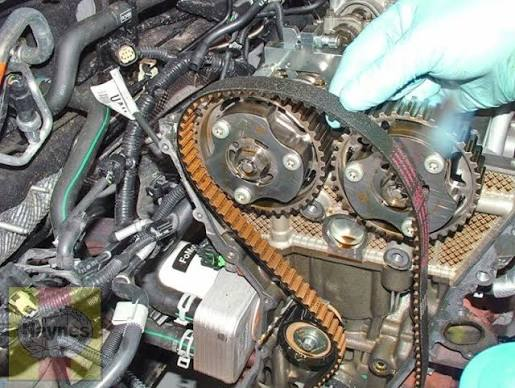
A wet timing belt is a reinforced belt designed to operate within the engine, usually in an oil environment. Its main job is to keep the crankshaft and camshaft correctly synchronised so that the engine’s valves open and close at the correct time.
The system can help manufacturers achieve:
- Reduced mechanical noise
- Lower friction in certain engine designs
- Improved efficiency
- Compact engine packaging
- Reduced emissions in some applications
However, the belt material must remain compatible with the engine oil. Incorrect oil specifications, contamination, or deterioration can affect the belt over time.
What Affects Wet Timing Belt Replacement Cost?
There is no single fixed price for replacing a wet timing belt because the work varies considerably between vehicles and engines. The wet timing belt replacement cost can depend on several factors.
Vehicle and Engine Design
Different manufacturers use different wet belt systems. Access to the belt can also vary significantly. Some engines require considerably more labour to reach and replace the belt correctly.
Parts Required
A replacement may involve more than the belt itself. Depending on the manufacturer’s recommended procedure, a technician may inspect or replace related components such as:
- Tensioners
- Idler components
- Seals
- Fasteners
- Oil and oil filters
- Other timing-system components
Using the correct specification of replacement parts is particularly important because the belt operates in contact with engine oil.
Labour Time
Labour can represent a substantial part of the overall cost. If access to the timing system requires the removal of multiple components, the job can take considerably longer than a conventional belt replacement.
Condition of the Existing Belt
If the belt has begun deteriorating, material may enter the engine’s lubrication system. In such circumstances, additional inspection or cleaning may be necessary. This can increase the final repair cost.
When Should a Wet Timing Belt Be Replaced?
Replacement intervals vary according to the vehicle manufacturer, engine type, mileage, age, and operating conditions. Vehicle owners should therefore check the manufacturer’s service schedule rather than relying on a universal mileage figure.
Signs that may justify professional inspection include:
- Visible belt deterioration during an appropriate inspection
- Unusual engine noises
- Oil-pressure warnings
- Difficulty starting
- Engine performance changes
- Debris or belt material found in the oil system
Importantly, a wet belt may not always show obvious external symptoms before a problem develops. Regular servicing with the correct oil specification is therefore an important part of preventive maintenance.
Best Practices When Replacing a Wet Timing Belt
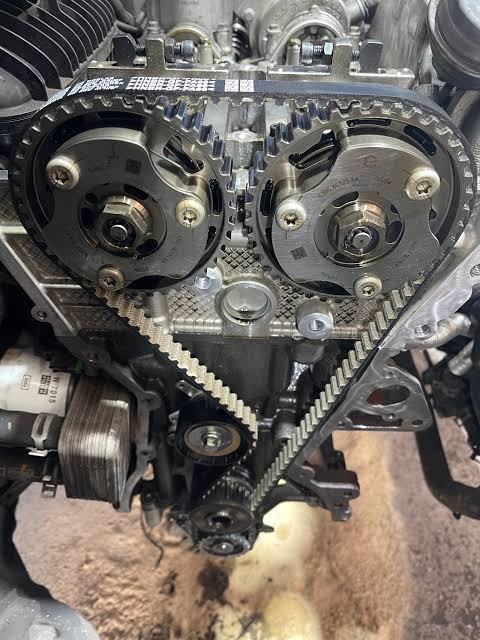
Replacing wet timing belt systems requires careful attention to both the timing components and the engine’s lubrication requirements.
A professional replacement should generally involve checking the manufacturer’s procedures, using the correct belt and oil specification, and ensuring the timing is accurately set.
Vehicle owners can also reduce risk by following several practical habits:
- Use the correct engine oil.
Always follow the manufacturer’s required specification rather than choosing oil based only on viscosity. - Maintain regular servicing.
Oil changes are particularly important for engines using oil-bathed timing belts. - Keep service records.
Documentation can help establish when maintenance was completed and which oil specification was used. - Investigate warning signs early.
Oil-pressure warnings, unusual noises, or starting problems should not be ignored. - Check the manufacturer’s replacement schedule.
Age and mileage limits can differ substantially between engines.
For drivers searching for wet timing belt replacement Trowbridge, a useful starting point is to review the vehicle’s service requirements and discuss the engine’s specific belt system with a qualified technician. Information from S&M Auto Service can also provide a useful reference when researching wet timing belt replacement requirements in the Trowbridge area.
Why Preventive Maintenance Matters
Timing systems are critical to engine operation. If the belt fails or the engine timing becomes incorrect, the resulting damage can be considerably more expensive than routine maintenance.
Modern vehicle servicing is increasingly focused on preventative inspection rather than simply responding after a component fails. For wet belt engines, this approach is especially relevant because oil quality, service intervals, belt condition, and engine design are closely connected.
Owners should also remember that replacement is not simply a matter of fitting a new belt. The surrounding system and lubrication system need to be considered as part of the repair.
Final Takeaway
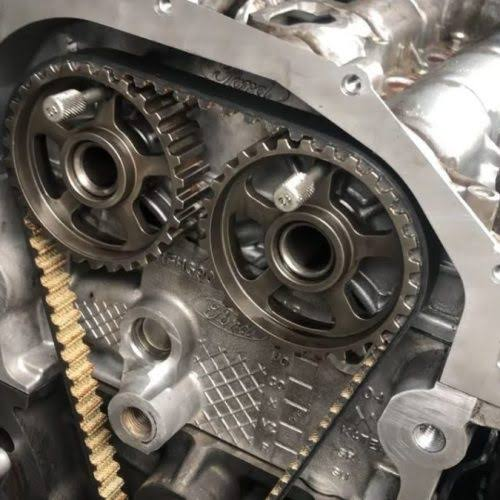
Wet timing belts can provide important engineering advantages, but they require the correct maintenance approach. The wet timing belt replacement cost depends on the vehicle, engine design, parts required, labour time, and condition of the existing system.
Following the manufacturer’s service schedule, using the correct oil specification, and responding promptly to warning signs can help reduce the risk of premature belt deterioration. When replacement is due, choosing a technician familiar with the specific engine design can help ensure that the timing system and associated components are handled correctly.
For UK vehicle owners, understanding the maintenance requirements before a belt reaches the end of its service life is one of the simplest ways to make timing-system repairs more predictable and avoid preventable engine problems.